Asheville 2030

Where We’re Going
UNC Asheville is at an important moment in its history, entering a period of focused planning to chart a path to success and to overcome challenges facing higher education nationwide. Through Asheville 2030, the University is aligning academic priorities, enrollment strategy, financial planning, and campus development to strengthen its foundation for the future.
By 2030, we want UNC Asheville to have a sustainable enrollment of 3,500 to 4,000 students drawn to and supported by our commitment to the vision of an innovative public liberal arts and sciences university of the future known for its student-centered focus, hands-on learning, technology-driven solutions, and career-ready emphasis.
A Message from the Chancellor

Since 1927, UNC Asheville has been guided by a belief in the power of a public liberal arts education to open doors, spark curiosity, and prepare students to engage thoughtfully with the world around them. That mission remains as vital today as it was at our founding.
At the same time, we are clear-eyed about the challenges before us. Like many public universities across the country, UNC Asheville is navigating shifting enrollment patterns, rising costs, and uncertainty in funding. Standing still is not an option if we are to remain a strong educational, cultural, and economic force for Western North Carolina.
The Asheville 2030 initiative reflects our commitment to moving forward with purpose. It brings academic direction, financial stewardship, enrollment strategy, and campus planning into closer alignment so that today’s decisions support long-term sustainability.
This work is not about change for change’s sake. It is about protecting access to a quality education, strengthening the student experience, and ensuring that a public liberal arts experience remains available to future generations.
Of course, conversations about the future can lead to uncertainty and strong emotions, and such reactions are understandable. But at moments like these, our history offers perspective. Over the past 100 years, UNC Asheville has navigated immense change, always guided by its public mission. Asheville 2030 is designed to build on that legacy, carrying the University into its next century with clarity, care, and confidence.
Kimberly van Noort, Ph.D.
Chancellor
Current Challenges in Higher Education
Universities across the country are confronting challenges that require proactive, far-reaching planning and actions rather than focusing on short-term fixes.
-
Declining numbers of traditional college-aged students
-
Increased competition for enrollment and funding
-
Rising operational, infrastructure, and student support costs
-
Budget uncertainty at the state and federal levels
Our Strategic Priorities
Asheville 2030 is a coordinated effort to position UNC Asheville for long-term sustainability by advancing four interconnected priorities:

Stabilizing Enrollment and Expanding Access
A sustainable future depends on a healthy, supported student body. Programs such as Access Asheville reduce financial barriers for students from North Carolina and neighboring states, helping to strengthen enrollment while advancing the University’s public mission.

Aligning Academic Offerings With Demand and Resources
UNC Asheville recently completed its Academic Portfolio Review, evaluating how programs aligned with student interest, institutional strengths, workforce needs, and available resources through a shared governance process. With the review complete, the University is focused on strategic growth, aligning its academic offerings with evolving student demand and market needs.
Strengthening Financial Capacity
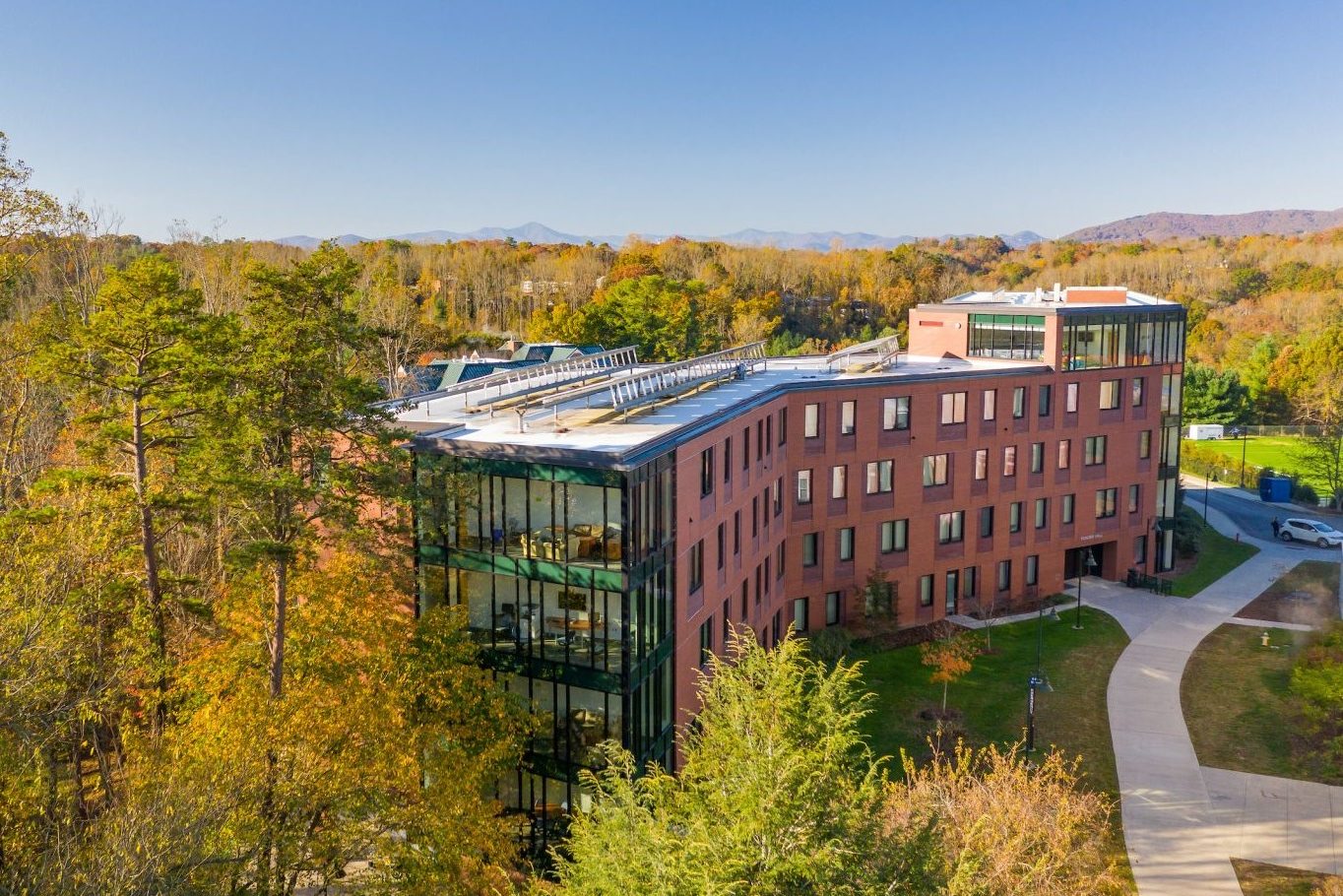
Improving financial resilience is central to Asheville 2030. This includes managing expenses, executing smart financial planning, advancing a comprehensive fundraising campaign, and modernizing campus facilities.

Leveraging Campus Assets to Support Long-Term Sustainability
As part of a broader strategy, the University is evaluating options for its Millennial Campus properties to explore how they could support UNC Asheville’s long-term sustainability and competitiveness.
Asheville 2030 Vision Plan
The University Planning Council (UPC) serves as the steering committee to synthesize ideas and formulate a draft Asheville 2030 Vision Plan for further consideration. The members of the UPC include:
- Eight members of the faculty, including the six members of the Institutional Development Committee
- Four members of the staff
- Two students, one of whom is selected by the Student Government Association and one appointed by the Vice Chancellor for Student Affairs
- Chancellor
- Vice Chancellors of Academic Affairs, Budget & Finance, and Student Affairs
- Chief of Staff
- Director of Institutional Research
- Chief Information Officer
- Director of Human Resources
- Director of Institutional Effectiveness
Working Groups
In early 2025, the Chancellor established four working groups designed to facilitate faculty and staff input in the Asheville 2030 Vision Process. Each group developed and recommended strategies and goals for the following areas:
A Technology Integrated Curriculum – The impact of technology, in all its forms, continues to increase and disrupt all facets of society. This group considered how we can better lead our students to incorporate technology into their work and research, understand the context and impact of those technologies, and prepare them to adapt to technologies that have not yet been invented.
The UNC Asheville STEAM Studio engages the next generation of makers, engineers, artists, and entrepreneurs, who work side-by-side with faculty and staff experts experienced in all facets of the creative process.
Career and Leadership Development – It is not enough to prepare our students for the future. We must also prepare them to be valuable team members and professionals and teach them to lead others because no one person alone can face and overcome the challenges of the 21st century. This group considered how we can infuse career and leadership development into the entire student experience, from orientation to beyond graduation, and how to integrate mentorships, industry partners, and career readiness into their education.
In UNC Asheville’s Pre-Health Professions Program, students receive breadth and depth of knowledge along with hands-on experiences to better understand their patients and relate to their peers in the chosen health profession.
Future-Facing Academic Programs – We must retain our fundamental liberal arts approach and continue to cultivate the understanding of what it is to be human and to live and work in an evolving society. At the same time, we must adapt our curriculum to better prepare students to address current and future issues and the needs of our region and state. We must lead in helping to attract economic development by providing the skilled brain power needed to power our future. This group considered how our academic programs are setting up our students for success by recommending innovations for our current programs and discovering new directions that will give students even more opportunities to expand their learning experience.
In 2025, UNC Asheville revised its core curriculum, a major milestone in its ongoing commitment to student-centered, forward-looking education.
Student Success and the Student Experience – Student success is the cornerstone of our mission. From success in the classroom to the skills needed to drive overall well-being and belonging, we must address the whole student. We must provide the resources necessary for academic success and beyond. When students attend UNC Asheville, they not only value the myriad academic opportunities available to them, they also enjoy the experiences outside of the classroom that can enrich their lives. This group considered all the ways we might enhance and expand the student experience, from student support services, to athletics, recreation, and entertainment, to social engagement.
UNC Asheville is investing in a bold renovation and expansion project for Lipinsky Hall that will honor the building’s rich legacy while equipping it to serve future generations. It is also evaluating the future potential of its Millennial Campus properties to better understand how these assets could support the University’s long-term sustainability, mission, and competitiveness.
Other Leadership Groups
UNC Asheville Board of Trustees
UNC Asheville Foundation Board
FAQ
UNC Asheville is responding proactively to challenges affecting higher education nationwide, including shifting enrollment patterns, rising costs, and funding uncertainty. Asheville 2030 provides a coordinated framework to align academic priorities, enrollment strategy, financial planning, and campus development so the University can move forward with clarity and purpose rather than short-term fixes.
No. Asheville 2030 is designed to strengthen and protect UNC Asheville’s public liberal arts mission. The initiative focuses on ensuring long-term sustainability so that the University can continue providing a high-quality, accessible education for future generations.
The initiative prioritizes student success by stabilizing enrollment, expanding access through programs like Access Asheville, aligning academic offerings with demand and resources, and investing in facilities and services that support learning, well-being, and engagement.
UNC Asheville recently completed its Academic Portfolio Review, evaluating how academic programs aligned with student interest, institutional strengths, workforce needs, and available resources. The process emphasized thoughtful alignment and followed established shared governance procedures. With the review complete, the University is now focused on strategic growth, adding programs that respond to evolving student demand and market needs.
Asheville 2030 emphasizes responsible financial stewardship, including managing expenses, improving long-term financial resilience, advancing fundraising efforts, and making strategic investments in campus assets and facilities.